The number
The setting point is 220 °F, or 104.4 °C. The more useful form of the same figure is 8 °F above the boiling point of water in your own kitchen, because boiling point falls with altitude and a fixed 220 °F is wrong by a measurable margin a few hundred metres up. Both come from the same source, Clemson's jelly-making guidance, and marmalade takes the same figure as jam and jelly: the mechanism is identical, only the fruit differs.
What that reading reports is concentration. Sugar raises the boiling point of a syrup in proportion to how much of it is dissolved, so the temperature is a proxy for how much water has gone, which is also the figure the EU definitions put a floor under, at 60 per cent soluble dry matter for jam, jelly and marmalade alike.
Why the thermometer is the second test, not the first
Because concentration is only one of the three conditions. A pan can reach 220 °F exactly and still not gel, if the pectin has nothing to bond with or cannot bond at that pH, which makes the temperature a necessary and insufficient reading.
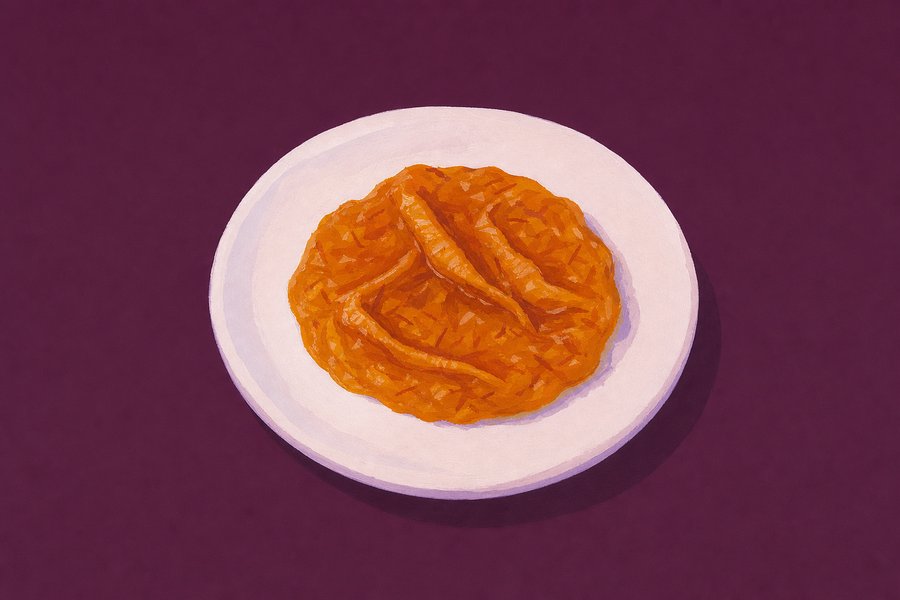
The cold plate tests the thing itself. A spoonful onto a chilled saucer, a minute back in the cold, then push it: a wrinkle that holds a furrow is a network. Nothing on a dial contradicts that, in either direction. Marmalade makes the point vividly, because the peel gives the syrup a body that reads as thickness long before the gel arrives, and thickness is not a set.
The orange in the register, which is not what it tastes like
Here is where the register says something a marmalade recipe does not. Orange measures pH 3.69–4.34, which puts its acid class at low. And the Nebraska listing puts oranges in set group 2, the group that needs a little help, explicitly on the grounds of low acid. The fruit that tastes sharpest of anything most people put in a pan is classified as short of acid.
Which is the explanation for something every marmalade recipe does without saying why: it adds lemon. Lemon measures pH 2.00–2.60, the most acidic entry in the register, set group 1. The lemon is not there for flavour balance. It is there to bring the pH of the pan into the band where the pectin can bond, and the peel-and-pip bag that so many methods call for is doing the other half of the job, since that is where the fruit's pectin is concentrated.
Bitter Seville oranges are not separately measured in the register, so nothing is asserted about their pH specifically; the sweet-orange row is what the sources carry. What holds either way is the mechanism. See pectin for it, and jam sugar for the concentration line.
If it has not set
Wait before acting: a preserve keeps firming for a day or two after bottling, and marmalade is slower than most because of the peel. After that, the diagnosis is the same three-way split as any preserve, and it is set out in jam that will not set. For marmalade the likeliest of the three is concentration, and it is the one more boiling actually fixes.
Worth naming the alternative rather than treating it as failure: a loose citrus preserve is a recognised thing in its own right, closer to the compote family than to a failed marmalade. The full per-fruit figures are in the register.
Questions about the marmalade setting point
What is the setting point for marmalade?
220 °F (104.4 °C), or 8 °F above the boiling point of water where you are. The second form is the reliable one, because boiling point falls with altitude.
Is the setting point for marmalade different from jam?
No. The mechanism is the same and so is the figure. What differs is that the peel gives marmalade a body that reads as thickness well before the gel forms, which makes the cold plate more useful here than anywhere else.
Why does marmalade need lemon juice?
Because orange is classified low in acid, at pH 3.69–4.34, and set group 2, which is the group that needs help. Lemon brings the pan into the pH band where pectin can bond. It is structural, not a flavour adjustment.
Can I make marmalade without a thermometer?
Yes, and the cold-plate test is the better test in any case: it shows whether a gel has formed, where the thermometer only shows how concentrated the syrup is.
My marmalade has not set. What can I do?
Give it two or three days first; marmalade firms slowly. After that, the usual cause is concentration rather than pectin, and that is the one case where reboiling genuinely works.