| Fruit | pH | Sugars /100 g | Pectin | Set group |
|---|---|---|---|---|
| Blackcurrant | not established | not established | High | 1 |
| Gooseberry | 2.80–3.10 | not established | High | 1 |
| Quince | 3.12–3.40 | not established | High | 1 |
| Strawberry | 3.00–3.90 | 4.89 g | Low | 3 |
| Raspberry | 3.22–3.95 | 4.42 g | not established | 3 |
| Rhubarb | 3.10–3.40 | 1.10 g | Low | not established |
| Mango | 3.40–4.80 | 13.66 g | not established | not established |
| Fig | 5.05–5.98 | 16.26 g | not established | 3 |
Three conditions, measured separately
A preserve sets because pectin, acid and sugar meet in the right proportions. Pectin is the structure, acid is what makes the pectin able to bond, and sugar draws the water out of the way so the bonds can form. Take any one of the three away and the other two cannot compensate: a low-pectin fruit boiled longer in more sugar gets thicker, not set, and a low-acid fruit with plenty of pectin stays syrup until acid is added.
That is why this site keeps acid and pectin as two readings rather than one score. Most published tables collapse them into a single “pectin level” column, which hides the difference between a fruit that will set with a squeeze of lemon and one that needs a partner fruit or a packet. The full register of thirty-four fruits lists both, alongside measured pH and sugars per hundred grams.
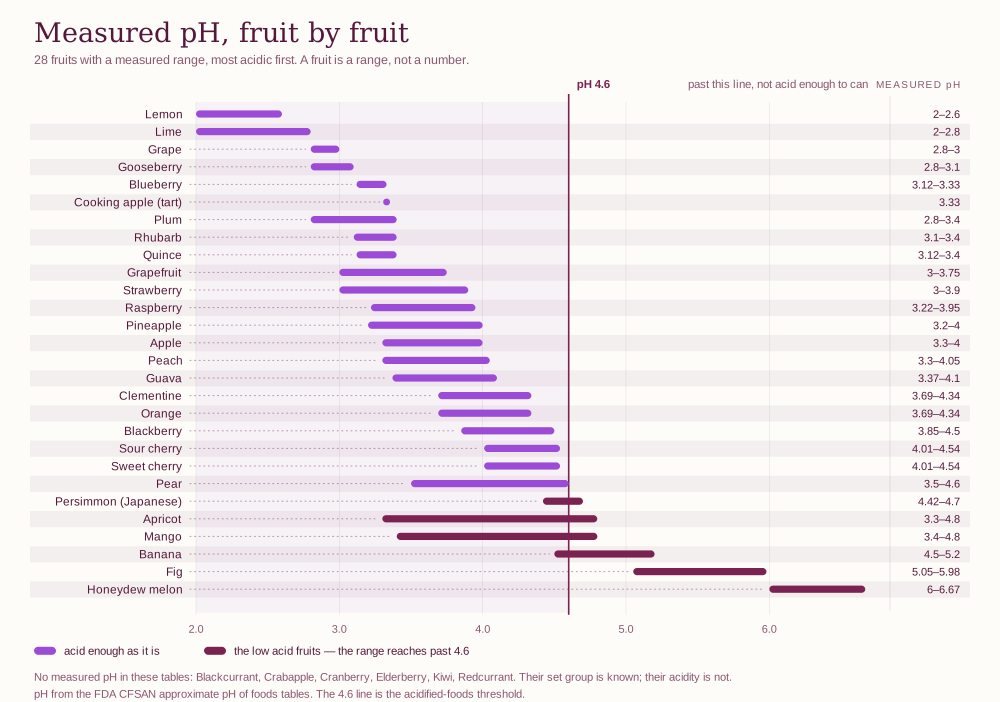
There is a second reason to know a fruit's acidity, unrelated to setting. The pH 4.6 line decides whether a jar can be processed in a boiling-water bath at all. Below it, acid is doing preserving work; above it, it is not, and the jar needs a pressure canner or added acid. Six of the fruits in the register cross that line, and none of them are obvious from taste alone.
How the figures were assembled
Every value here is traced to a published source rather than copied from another recipe site. Sugars come from USDA FoodData Central, SR Legacy release, by database identifier. pH ranges come from the FDA CFSAN approximate-pH tables. Set groups come from the University of Nebraska and Clemson extension listings, which classify a fruit by how much help it needs to gel. Where two sources gave different ranges for the same fruit, the wider range is shown, because a range that is too narrow is more misleading than one that is too broad.
Where no measured figure exists, the field says not established. Six of the thirty-four fruits have no published pH and fourteen have no pectin classification. An estimate in those cells would be indistinguishable from a measurement, so there is none. This matters more than it sounds: the version of this table that circulates most widely lists guava as very low in pectin, which is not a measurement of anything.

What the register cannot tell you
Two limits worth stating. A published pH is a range across cultivars and ripeness, not a property of the fruit in front of you: the same variety picked a week apart moves within that range, and a range is the honest way to express it. And pectin content falls as fruit ripens, so a set-group classification describes a fruit at usable ripeness rather than at its sweetest. Both of those are reasons the cold-plate test outranks any table at the moment of decision.
The tables are for deciding what to buy, what to pair it with and whether the jar can go into a water bath. They are not for deciding when to take the pan off the heat. Nothing written down can do that, because it depends on this fruit, this week, in this pan.
Where to go from the register
Preserves covers what to do once the numbers are known: jam, jelly, curd and the cold-plate test that settles a set faster than any chart. Technique handles the parts of baking that are ratio problems rather than recipe problems: the cream family, the tart doughs, blind baking and lamination. Nordic is the Swedish and Danish end of the kitchen, where a lot of the fruit in the register actually gets used, and Kitchen is pans, tins and the sizes they really are.
For a quantity rather than a reading, work out a batch: give it a fruit and a weight and it reports what sugar and water the fruit itself brings, how much water has to leave the pan, how many jars that fills, and what share of the finished jar is fruit, from these same measured figures, and silent where the sources are.
Common questions
Why are acid and pectin listed separately?
Because they fail independently. Rhubarb is very acidic and low in pectin; a blackcurrant is high in pectin with no published pH at all. A single combined score cannot tell you which of the two a fruit is short of, and that is exactly the thing that decides what to add.
Where do the numbers come from?
Sugars from USDA FoodData Central (SR Legacy), pH from the FDA CFSAN tables, set groups from the Nebraska and Clemson extension listings. Each fruit carries the identifier or entry it was taken from, so any figure can be checked at source.
What does “not established” mean?
That no measured value was found in those sources for that fruit and field. It is not zero and it is not an estimate. Filling the gap with a plausible number is how errors enter a reference table and then get copied out of it for years.
Which fruits set without any help?
The high-pectin, high-acid ones: quince, crabapple, cranberry, redcurrant, gooseberry and tart cooking apples. Quince is the extreme case, which is why quince paste sets firm enough to slice with nothing added but sugar.
Can I use this to decide whether something is safe to can?
Use it to see which side of pH 4.6 a fruit falls on, then follow a tested canning process for that side. The register reports measured ranges; it is not a canning schedule, and a fruit whose range crosses the line should be treated as the less acidic case.