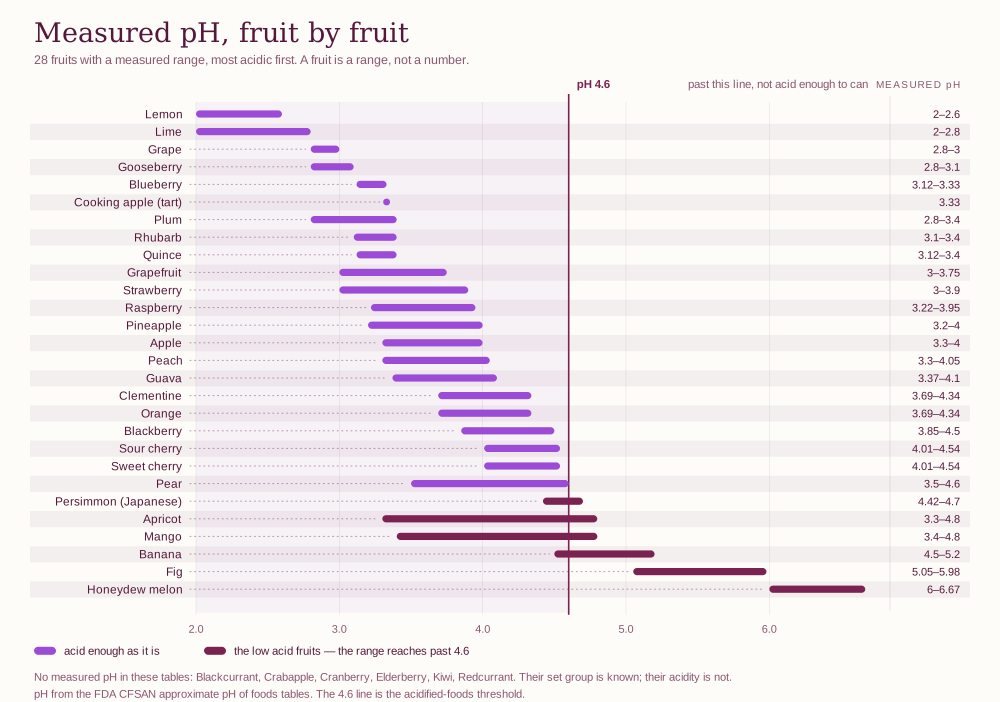
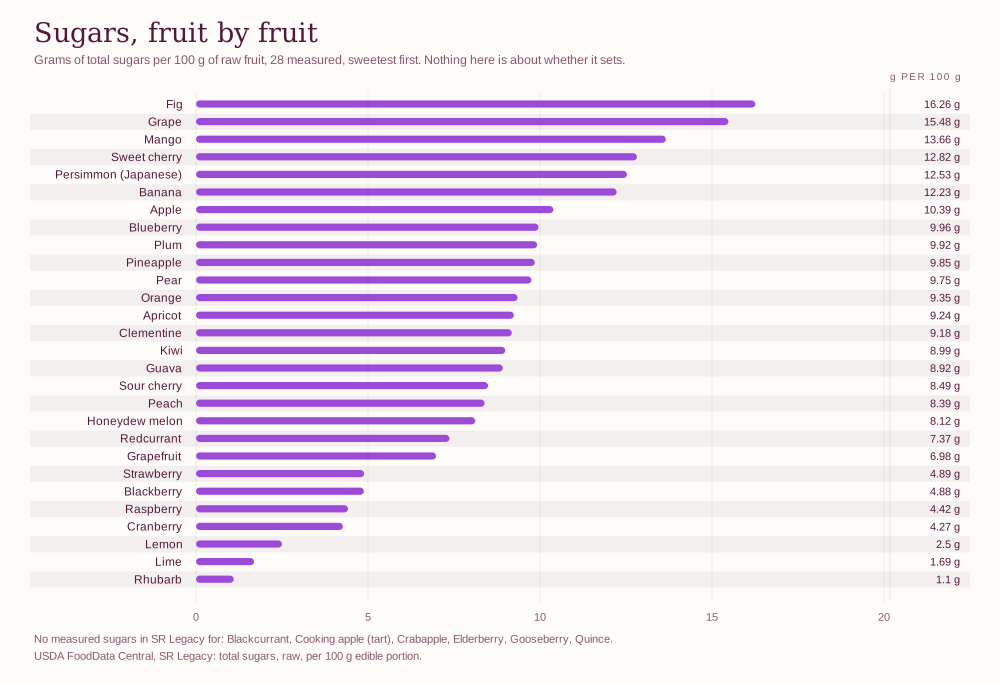
The table above is the readings. This is what they imply. Each fruit gets two answers rather
than one, because they are two questions: whether it will set depends on
pectin and acid together, and whether it is acid enough to can as it is
depends only on where its range falls against 4.6. A fruit can be easy to set and still need
acidifying before it goes in a jar.
Apple
Pectin not established
Its acid is measured at medium, but its pectin is not established, so whether it sets on its own is unproven. Test on a cold plate rather than trusting a chart.
Canning as it is Its whole measured range, 3.3–4, sits below 4.6.
- pH
- 3.30–4.00
- Acid
- Medium
- Sugars
- 10.39 g
- Pectin
- not established
Its row in the table
Cooking apple (tart)
Sets on its own
High pectin and acid enough. It gels without help, which is why it is also useful as a partner for fruits that do not.
Canning as it is Its whole measured range, 3.33–3.33, sits below 4.6.
- pH
- 3.33–3.33
- Acid
- High
- Sugars
- not established
- Pectin
- High
Its row in the table
Apricot
Add acid and pectin
Short on both readings. Acid first, because pectin cannot gel without it, then pectin or a high-pectin partner.
Canning as it is Its range, 3.3–4.8, reaches past 4.6, so an individual fruit may fall either side of the line. Treat it as needing acidification.
Carries a set cooking apple (tart), gooseberry, grape, grapefruit, lemon, lime, plum, quince. High pectin and acid of their own, so they can carry this one.
- pH
- 3.30–4.80
- Acid
- Low
- Sugars
- 9.24 g
- Pectin
- Low
Its row in the table
Banana
Pectin not established
Its acid is measured at low, but its pectin is not established, so whether it sets on its own is unproven. Test on a cold plate rather than trusting a chart.
Canning as it is Its range, 4.5–5.2, reaches past 4.6, so an individual fruit may fall either side of the line. Treat it as needing acidification.
- pH
- 4.50–5.20
- Acid
- Low
- Sugars
- 12.23 g
- Pectin
- not established
Its row in the table
Blackberry
Pectin not established
Its acid is measured at low, but its pectin is not established, so whether it sets on its own is unproven. Test on a cold plate rather than trusting a chart.
Canning as it is Its whole measured range, 3.85–4.5, sits below 4.6.
- pH
- 3.85–4.50
- Acid
- Low
- Sugars
- 4.88 g
- Pectin
- not established
Its row in the table
Blackcurrant
Acid not established
Its pectin is recorded as high, but there is no measured pH, so no acid class is asserted and the set cannot be predicted from these two readings alone.
Canning as it is No measured pH in the sources, so nothing is asserted about canning it as it is.
- pH
- not established
- Acid
- not established
- Sugars
- not established
- Pectin
- High
Its row in the table
Blueberry
Add pectin
Acid enough, pectin short. It needs added pectin or a high-pectin partner; boiling it down further concentrates sugar without creating the network that sets it.
Canning as it is Its whole measured range, 3.12–3.33, sits below 4.6.
Carries a set cooking apple (tart), gooseberry, grape, grapefruit, lemon, lime, plum, quince. High pectin and acid of their own, so they can carry this one.
- pH
- 3.12–3.33
- Acid
- High
- Sugars
- 9.96 g
- Pectin
- Low
Its row in the table
Sour cherry
Pectin not established
Its acid is measured at low, but its pectin is not established, so whether it sets on its own is unproven. Test on a cold plate rather than trusting a chart.
Canning as it is Its whole measured range, 4.01–4.54, sits below 4.6.
- pH
- 4.01–4.54
- Acid
- Low
- Sugars
- 8.49 g
- Pectin
- not established
Its row in the table
Sweet cherry
Add acid and pectin
Short on both readings. Acid first, because pectin cannot gel without it, then pectin or a high-pectin partner.
Canning as it is Its whole measured range, 4.01–4.54, sits below 4.6.
Carries a set cooking apple (tart), gooseberry, grape, grapefruit, lemon, lime, plum, quince. High pectin and acid of their own, so they can carry this one.
- pH
- 4.01–4.54
- Acid
- Low
- Sugars
- 12.82 g
- Pectin
- Low
Its row in the table
Clementine
Pectin not established
Its acid is measured at low, but its pectin is not established, so whether it sets on its own is unproven. Test on a cold plate rather than trusting a chart.
Canning as it is Its whole measured range, 3.69–4.34, sits below 4.6.
- pH
- 3.69–4.34
- Acid
- Low
- Sugars
- 9.18 g
- Pectin
- not established
Its row in the table
Crabapple
Acid not established
Its pectin is recorded as high, but there is no measured pH, so no acid class is asserted and the set cannot be predicted from these two readings alone.
Canning as it is No measured pH in the sources, so nothing is asserted about canning it as it is.
- pH
- not established
- Acid
- not established
- Sugars
- not established
- Pectin
- High
Its row in the table
Cranberry
Acid not established
Its pectin is recorded as high, but there is no measured pH, so no acid class is asserted and the set cannot be predicted from these two readings alone.
Canning as it is No measured pH in the sources, so nothing is asserted about canning it as it is.
- pH
- not established
- Acid
- not established
- Sugars
- 4.27 g
- Pectin
- High
Its row in the table
Elderberry
Not established
Neither its pectin nor its acid is established in the sources. The cold-plate test is the only honest guide here.
Canning as it is No measured pH in the sources, so nothing is asserted about canning it as it is.
- pH
- not established
- Acid
- not established
- Sugars
- not established
- Pectin
- not established
Its row in the table
Fig
Pectin not established
Its acid is measured at low, but its pectin is not established, so whether it sets on its own is unproven. Test on a cold plate rather than trusting a chart.
Canning as it is Its whole measured range, 5.05–5.98, sits above 4.6, so acid has to be added before it is canned, not as a matter of flavour.
- pH
- 5.05–5.98
- Acid
- Low
- Sugars
- 16.26 g
- Pectin
- not established
Its row in the table
Gooseberry
Sets on its own
High pectin and acid enough. It gels without help, which is why it is also useful as a partner for fruits that do not.
Canning as it is Its whole measured range, 2.8–3.1, sits below 4.6.
- pH
- 2.80–3.10
- Acid
- High
- Sugars
- not established
- Pectin
- High
Its row in the table
Grape
Sets on its own
High pectin and acid enough. It gels without help, which is why it is also useful as a partner for fruits that do not.
Canning as it is Its whole measured range, 2.8–3, sits below 4.6.
- pH
- 2.80–3.00
- Acid
- High
- Sugars
- 15.48 g
- Pectin
- High
Its row in the table
Grapefruit
Sets on its own
High pectin and acid enough. It gels without help, which is why it is also useful as a partner for fruits that do not.
Canning as it is Its whole measured range, 3–3.75, sits below 4.6.
- pH
- 3.00–3.75
- Acid
- Medium
- Sugars
- 6.98 g
- Pectin
- High
Its row in the table
Guava
Pectin not established
Its acid is measured at low, but its pectin is not established, so whether it sets on its own is unproven. Test on a cold plate rather than trusting a chart.
Canning as it is Its whole measured range, 3.37–4.1, sits below 4.6.
- pH
- 3.37–4.10
- Acid
- Low
- Sugars
- 8.92 g
- Pectin
- not established
Its row in the table
Kiwi
Not established
Neither its pectin nor its acid is established in the sources. The cold-plate test is the only honest guide here.
Canning as it is No measured pH in the sources, so nothing is asserted about canning it as it is.
- pH
- not established
- Acid
- not established
- Sugars
- 8.99 g
- Pectin
- not established
Its row in the table
Lemon
Sets on its own
High pectin and acid enough. It gels without help, which is why it is also useful as a partner for fruits that do not.
Canning as it is Its whole measured range, 2–2.6, sits below 4.6.
- pH
- 2.00–2.60
- Acid
- High
- Sugars
- 2.50 g
- Pectin
- High
Its row in the table
Lime
Sets on its own
High pectin and acid enough. It gels without help, which is why it is also useful as a partner for fruits that do not.
Canning as it is Its whole measured range, 2–2.8, sits below 4.6.
- pH
- 2.00–2.80
- Acid
- High
- Sugars
- 1.69 g
- Pectin
- High
Its row in the table
Mango
Pectin not established
Its acid is measured at low, but its pectin is not established, so whether it sets on its own is unproven. Test on a cold plate rather than trusting a chart.
Canning as it is Its range, 3.4–4.8, reaches past 4.6, so an individual fruit may fall either side of the line. Treat it as needing acidification.
- pH
- 3.40–4.80
- Acid
- Low
- Sugars
- 13.66 g
- Pectin
- not established
Its row in the table
Honeydew melon
Pectin not established
Its acid is measured at low, but its pectin is not established, so whether it sets on its own is unproven. Test on a cold plate rather than trusting a chart.
Canning as it is Its whole measured range, 6–6.67, sits above 4.6, so acid has to be added before it is canned, not as a matter of flavour.
- pH
- 6.00–6.67
- Acid
- Low
- Sugars
- 8.12 g
- Pectin
- not established
Its row in the table
Orange
Add acid
The pectin is there; the acid is short. Lemon juice is the correction, not more sugar, and not longer boiling.
Canning as it is Its whole measured range, 3.69–4.34, sits below 4.6.
- pH
- 3.69–4.34
- Acid
- Low
- Sugars
- 9.35 g
- Pectin
- High
Its row in the table
Peach
Add acid and pectin
Short on both readings. Acid first, because pectin cannot gel without it, then pectin or a high-pectin partner.
Canning as it is Its whole measured range, 3.3–4.05, sits below 4.6.
Carries a set cooking apple (tart), gooseberry, grape, grapefruit, lemon, lime, plum, quince. High pectin and acid of their own, so they can carry this one.
- pH
- 3.30–4.05
- Acid
- Low
- Sugars
- 8.39 g
- Pectin
- Low
Its row in the table
Pear
Pectin not established
Its acid is measured at low, but its pectin is not established, so whether it sets on its own is unproven. Test on a cold plate rather than trusting a chart.
Canning as it is Its whole measured range, 3.5–4.6, sits below 4.6.
- pH
- 3.50–4.60
- Acid
- Low
- Sugars
- 9.75 g
- Pectin
- not established
Its row in the table
Persimmon (Japanese)
Pectin not established
Its acid is measured at low, but its pectin is not established, so whether it sets on its own is unproven. Test on a cold plate rather than trusting a chart.
Canning as it is Its range, 4.42–4.7, reaches past 4.6, so an individual fruit may fall either side of the line. Treat it as needing acidification.
- pH
- 4.42–4.70
- Acid
- Low
- Sugars
- 12.53 g
- Pectin
- not established
Its row in the table
Pineapple
Add pectin
Acid enough, pectin short. It needs added pectin or a high-pectin partner; boiling it down further concentrates sugar without creating the network that sets it.
Canning as it is Its whole measured range, 3.2–4, sits below 4.6.
Carries a set cooking apple (tart), gooseberry, grape, grapefruit, lemon, lime, plum, quince. High pectin and acid of their own, so they can carry this one.
- pH
- 3.20–4.00
- Acid
- Medium
- Sugars
- 9.85 g
- Pectin
- Low
Its row in the table
Plum
Sets on its own
High pectin and acid enough. It gels without help, which is why it is also useful as a partner for fruits that do not.
Canning as it is Its whole measured range, 2.8–3.4, sits below 4.6.
- pH
- 2.80–3.40
- Acid
- High
- Sugars
- 9.92 g
- Pectin
- High
Its row in the table
Quince
Sets on its own
High pectin and acid enough. It gels without help, which is why it is also useful as a partner for fruits that do not.
Canning as it is Its whole measured range, 3.12–3.4, sits below 4.6.
- pH
- 3.12–3.40
- Acid
- High
- Sugars
- not established
- Pectin
- High
Its row in the table
Raspberry
Pectin not established
Its acid is measured at medium, but its pectin is not established, so whether it sets on its own is unproven. Test on a cold plate rather than trusting a chart.
Canning as it is Its whole measured range, 3.22–3.95, sits below 4.6.
- pH
- 3.22–3.95
- Acid
- Medium
- Sugars
- 4.42 g
- Pectin
- not established
Its row in the table
Redcurrant
Acid not established
Its pectin is recorded as high, but there is no measured pH, so no acid class is asserted and the set cannot be predicted from these two readings alone.
Canning as it is No measured pH in the sources, so nothing is asserted about canning it as it is.
- pH
- not established
- Acid
- not established
- Sugars
- 7.37 g
- Pectin
- High
Its row in the table
Rhubarb
Add pectin
Acid enough, pectin short. It needs added pectin or a high-pectin partner; boiling it down further concentrates sugar without creating the network that sets it.
Canning as it is Its whole measured range, 3.1–3.4, sits below 4.6.
Carries a set cooking apple (tart), gooseberry, grape, grapefruit, lemon, lime, plum, quince. High pectin and acid of their own, so they can carry this one.
- pH
- 3.10–3.40
- Acid
- High
- Sugars
- 1.10 g
- Pectin
- Low
Its row in the table
Strawberry
Add pectin
Acid enough, pectin short. It needs added pectin or a high-pectin partner; boiling it down further concentrates sugar without creating the network that sets it.
Canning as it is Its whole measured range, 3–3.9, sits below 4.6.
Carries a set cooking apple (tart), gooseberry, grape, grapefruit, lemon, lime, plum, quince. High pectin and acid of their own, so they can carry this one.
- pH
- 3.00–3.90
- Acid
- Medium
- Sugars
- 4.89 g
- Pectin
- Low
Its row in the table