What is in the bag
Three products sit next to each other on the same shelf and are not the same thing. Granulated sugar is sugar. Preserving sugar is sugar in larger crystals, which dissolve more slowly and foam less. It adds nothing but a coarser crystal. Jam sugar, sold in some markets as gelling sugar, is granulated sugar with pectin and an acid blended into it.
So jam sugar is not a better sugar. It is a sugar that carries two of the three conditions a set needs, which makes it the right product for a fruit that is short of them and a waste of money for a fruit that is not. A blackcurrant or a gooseberry brings its own pectin and its own acid; buying them again in the sugar changes nothing except the price and, sometimes, the texture, which can end up firmer than intended.

What the sugar is doing, which is not sweetening
Sugar has three jobs in a preserve and only one of them is flavour. It competes for water, which is what lets pectin chains find each other instead of staying separated. It raises the boiling point, which is how the temperature reading works as a proxy for concentration. And at a high enough concentration it makes the jar inhospitable to the organisms that spoil it, which is the preserving in preserves.
That last job is the one a lower-sugar recipe gives up, and it is why a reduced-sugar preserve is a fridge product with a short life rather than a shelf product. The trade is real and worth making deliberately; what it is not is a free substitution.
The 60 per cent line, and what a preserve is called below it
In the EU the designation is defined rather than descriptive. Jam, jelly and marmalade must reach 60 per cent or more soluble dry matter, measured by refractometer, and jam must contain at least 450 g of fruit per kilogram of finished product, and 500 g for extra jam. Below the dry-matter line the product is still perfectly good to eat; it is simply not the thing the word denotes, and it will not keep like it.
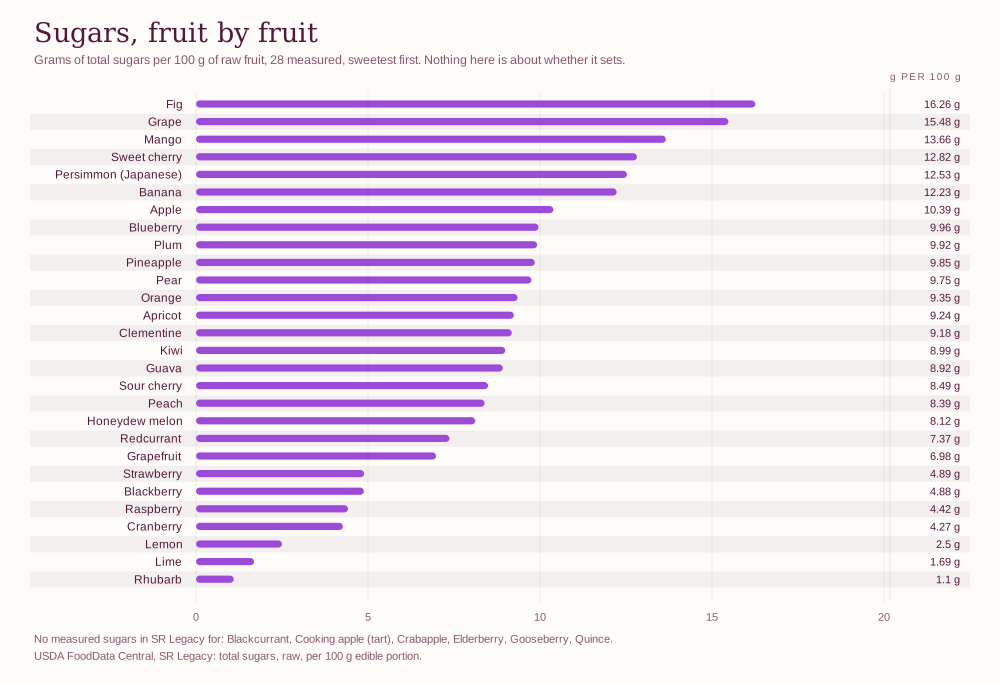
Those two numbers are also what makes a sugar ratio arithmetic rather than a matter of taste. The batch sheet takes a fruit, a weight and a ratio and reports which side of the line the result lands on, using the fruit's own measured sugars from the register rather than a generic figure.
Which fruits justify buying it
Read the fruit before the packet. A fruit classified low in pectin needs pectin, and jam sugar is one way to supply it. A fruit that is low in acid, like the figs and mangoes of the register, needs acid, and jam sugar supplies some of that too. A fruit that has both already needs neither, and the honest answer for it is granulated sugar and a cold-plate test.
Questions about jam sugar
What is jam sugar?
Granulated sugar with pectin and an acid blended into it. It supplies two of the three conditions a set needs, which is why it helps a fruit that lacks them and does nothing for a fruit that has them.
What is the difference between jam sugar and preserving sugar?
Preserving sugar is plain sugar in larger crystals: slower to dissolve, less foam, no pectin. Jam sugar contains added pectin and acid. The names are close and the products are not interchangeable.
Can I use normal sugar instead of jam sugar?
For a high-pectin, acidic fruit, yes. That is what it wants. For a low-pectin fruit you then have to add pectin some other way, either as a product or as a partner fruit.
How much sugar does jam legally need?
In the EU, 60 per cent or more soluble dry matter by refractometer for jam, jelly and marmalade, and at least 450 g of fruit per kg of finished jam (500 g for extra jam). Below that the product is fine to eat but is not what the word denotes and does not keep as long.
Does low-sugar jam keep as well?
No. Sugar concentration is part of what preserves the jar, so a reduced-sugar preserve is a refrigerated product with a short life rather than a store-cupboard one.