What are pepparkakor?
Pepparkakor are thin, hard spiced biscuits, rolled out very thin and cut into shapes. The singular is pepparkaka. What separates them from most of the things English calls gingerbread is the texture: a pepparkaka snaps. It is not a soft, cakey biscuit, and a recipe that produces a bendy one has produced something else.
That thinness is not decoration. It is what makes the same dough usable for a pepparkakshus, the gingerbread house, where the biscuit is rolled and cut as flat panels rather than as figures, and has to hold its own weight without sagging. A dough that bends will not stand up as a wall.
The spices, as recorded, are ginger, cinnamon, cloves and cardamom. Pepper belongs in that list historically and mostly does not belong in it now, which is where the name stops being obvious.
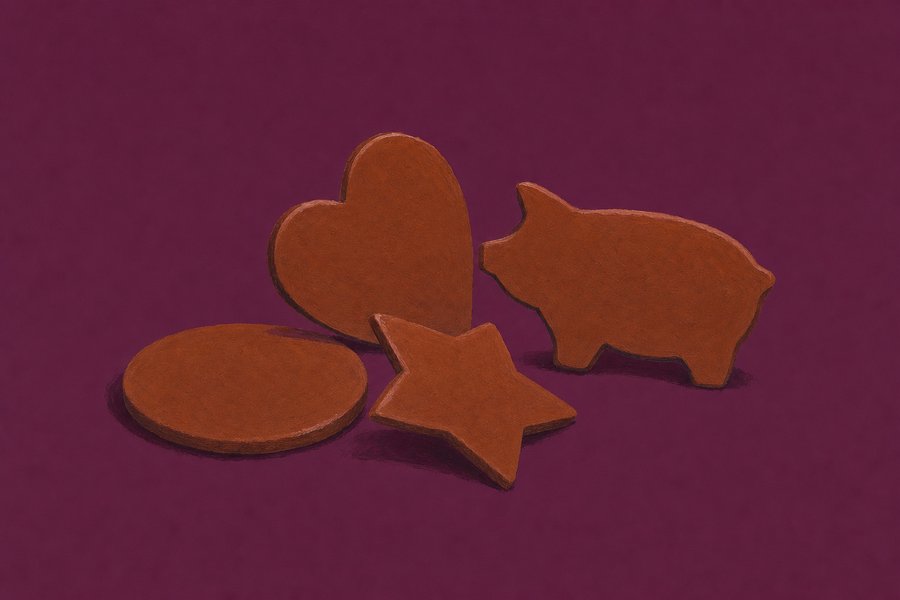
The name records a spice the biscuit has largely lost
Svenska Akademiens ordbok, the historical dictionary of the Swedish Academy, gives the word as Old Swedish piparkaka, formed from peppar and kaka, and cognate with Middle Low German peperkoke, Middle Dutch pepercoeke, Dutch peperkoek, German Pfefferkuchen and English pepper-cake. The whole family of names says pepper.
Its earliest dated Swedish appearance in that dictionary is a Stockholm toll book of 1534–36, which puts the word in commercial use as a traded commodity, counted at a customs post, by the first half of the sixteenth century. That is a firmer date than most claims made about this biscuit, and it is worth separating from them.
The dictionary then defines a pepparkaka as a cake flavoured with spices such as ginger, cinnamon, cloves and cardamom, with pepper marked i sht förr, meaning especially formerly. So the reference work itself records that the spice in the name is largely historical. A modern pepparkaka is named after something it generally does not contain.
Why that happened is not established. Two explanations circulate: that the biscuit once genuinely contained pepper and lost it, and that peppar was for a long time a loose word for imported spices in general, so a strongly spiced cake took the name without pepper ever being specific to it. Both are plausible, neither is settled here, and the dictionary answers the narrower question without answering the wider one.
Why one English word will not do
There is a practical problem behind this page, and it is a translation problem rather than a baking one. English uses gingerbread for pepparkaka, for German Lebkuchen and Pfefferkuchen, for French pain d’épices and for Polish piernik. Those are not variants of one thing.
Lebkuchen is soft, dense and often nutty, sitting somewhere between a cake and a biscuit. Pepparkakor are thin and brittle. A recipe found under the English word may produce either, and the two are not substitutable: a Lebkuchen dough will not build a house and a pepparkaka dough will not give the chewy interior a Lebkuchen is judged on. This is the same class of problem as kavring, where one word means a sweet rye loaf in Swedish and a dry rusk in Norwegian.
For anyone reading across languages, the useful test is not the ingredient list but the snap. If the finished biscuit bends, it belongs to a different tradition whatever the recipe was called.
Where it sits in the Swedish Christmas set
Pepparkakor are Advent and Christmas baking, and they are one of a small group that reappears every year rather than a standalone. The others are covered separately: the saffron buns at lussekatter, the flourless cinnamon stars at zimtstern, and the honey slices at honungssnittar, which belong to a whole family of biscuits named after how they are cut rather than what is in them.
The rest of the Swedish and Nordic bakes are indexed in the Nordic section, and the borrowed vocabulary used across this site is collected in the glossary.
Questions about pepparkakor
Do pepparkakor contain pepper?
Generally not. The Swedish Academy’s dictionary lists the spices as ginger, cinnamon, cloves and cardamom, and marks pepper as especially FORMER, so the reference work itself records that the spice in the name is historical rather than current.
What is the difference between pepparkakor and gingerbread?
English "gingerbread" is used for at least five different products: pepparkakor, German Lebkuchen and Pfefferkuchen, French pain d’épices and Polish piernik. Pepparkakor are thin and snap; Lebkuchen is soft, dense and often nutty. The word does not distinguish them, so the texture is the reliable test.
How old is the word pepparkaka?
Its earliest dated Swedish attestation in Svenska Akademiens ordbok is a Stockholm toll book of 1534–36, so the word was in commercial use by the first half of the sixteenth century. The form the biscuit takes now is a separate and much less well dated question.
Why does the dough have to be rolled so thin?
Because the biscuit is judged on snapping rather than bending, and because the same dough builds a pepparkakshus, a gingerbread house, where the panels have to hold their own weight. A dough soft enough to bend will not stand as a wall.
Is pepparkaka the same as a pepparkakshus?
The same biscuit, cut differently. A pepparkakshus uses the dough as flat panels rather than as figures, which is why the thinness and the brittleness matter structurally and not only as a texture preference.