What is fromage blanc?
A fresh unripened cheese, usually cow's milk, with the consistency of soured cream and a milder tang. It is sold in tubs like yoghurt, eaten as it is with fruit or sugar, and used in baking as the acid dairy component in cheesecakes and light cakes. Its near relative fromage frais is close enough to be interchangeable.
The important property is the one usually left out: Almost always made from SKIM milk, so it is markedly leaner than quark or cream cheese - which is why a straight cream-cheese swap changes the crumb.
That single fact explains why the obvious substitution does not work. Cream cheese is the ingredient most often suggested, and it carries several times the fat, so a cake made with it in place of fromage blanc is heavier, denser and richer, so a different cake rather than the same one approximated.
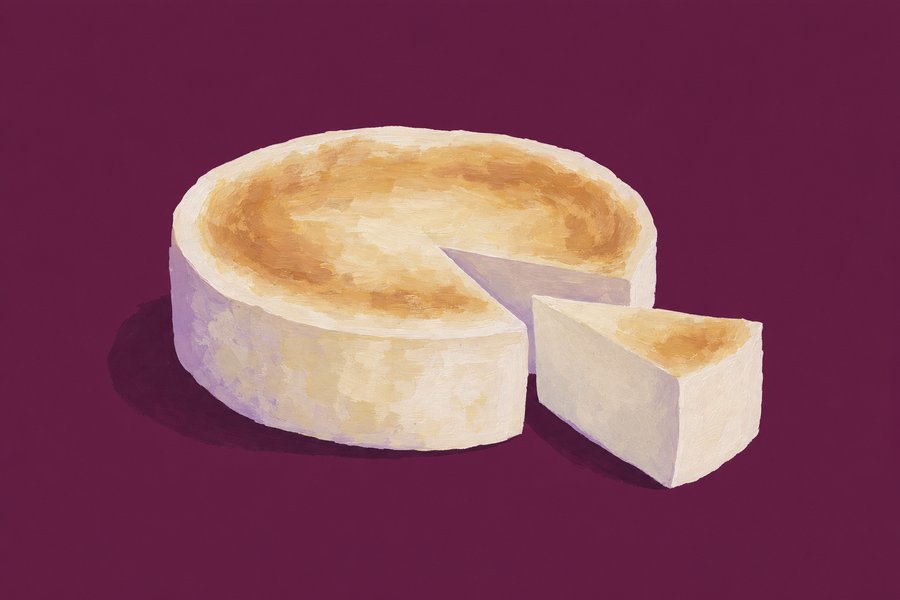
What actually substitutes for it
Ranked by how close each comes on both texture and tang, which are the two axes that matter.
- quark: 1:1, closest match on both tang and texture.
- fromage frais: 1:1.
- strained plain yoghurt: right consistency, sweeter flavour.
- ricotta: savoury use only - the grain never becomes spreadable.
- cream cheese: 2-3x the fat, richer and tangier - reduce other fat.
Quark is the German/Central-European equivalent and the only true 1:1. Ricotta is the worst swap in a cheesecake because the texture is granular, not smooth.
Quark is the answer worth remembering, because it is not an approximation at all: it is the German and Central European equivalent of the same product, made the same way, and it behaves identically. Where a shop stocks either, the one it stocks is the right one.
The rule this illustrates
Match on texture and fat first, flavour second. A substitution with the right consistency and the wrong tang gives a slightly different dessert; one with the right tang and the wrong texture gives a failed one. Texture is structural, and flavour is not.
Ricotta is the clear case. On flavour it is a reasonable stand-in: mild, milky, faintly sweet. On texture it is granular, and the grain does not smooth out with beating or with baking, so a ricotta cheesecake made to a fromage blanc recipe sets grainy. In a savoury filling that texture is unobjectionable, which is why the same swap is fine in one context and wrong in another.
Strained yoghurt is the pragmatic answer where quark is unavailable. It is the right consistency and lean in the right way, and its extra sweetness is easy to correct by reducing the sugar slightly. Straining matters: unstrained yoghurt carries too much water and will loosen a batter.
Why leanness changes a bake at all
Fat does three things in a cake batter: it shortens the crumb by interrupting gluten, it carries flavour, and it holds moisture. Swap a lean dairy component for a rich one and all three move at once, which is why the result is not simply richer but structurally different: a tighter, heavier crumb that reads as dense rather than tender.
There is a second variable people miss, which is water. A lean fresh cheese carries a great deal of it, and a batter formulated around that water is too slack if a drier substitute goes in and too stiff if a wetter one does. That is why straining matters with yoghurt, and why quark works with no adjustment at all: it holds a similar amount of water to begin with.
Going the other way, replacing a rich component with a lean one, tends to give a drier and more rubbery result, because the protein sets with less fat interrupting it. Neither direction is a failure exactly; both are a different cake from the one the recipe describes, and the recipe cannot tell you which because it assumes the ingredient it names. The general question of reading recipes this way is covered in the recipes section, and the French dairy vocabulary in the glossary.
Questions about fromage blanc
What can I use instead of fromage blanc?
Quark is the only true one-for-one, being the German and Central European equivalent of the same product. Fromage frais also works one-for-one. Strained plain yoghurt has the right consistency and is sweeter. Cream cheese changes the cake, because it is much richer.
Is fromage blanc the same as cream cheese?
No, and the difference is fat. Fromage blanc is almost always made from skim milk and is markedly leaner, so a straight cream-cheese swap gives a heavier, denser crumb rather than the same result.
Can I use ricotta in a fromage blanc cheesecake?
It is the worst of the options. The flavour is close enough, but ricotta’s texture is granular and the grain never smooths out, so the cheesecake sets grainy. In savoury use it is fine.
Is fromage blanc the same as fromage frais?
Closely related and interchangeable in baking. The names are used differently in different markets, and the practical difference in a cake is negligible.
Why does swapping a lean dairy for a rich one change the crumb?
Fat interrupts gluten, carries flavour and holds moisture, so changing it moves all three at once. More fat gives a tighter, heavier crumb that reads as dense; less gives a drier, more rubbery one.