Cake banane is the French name for it
Cake banane is the French-language name for a banana loaf or cake. The word cake in French is a borrowing with a narrower sense than the English one: it means a loaf-shaped cake baked in a tin, typically studded with fruit, so what English would call a loaf cake rather than a layer cake.
So cake banane is not a translation problem so much as a shape one. A French speaker using it is specifying the format, not just the flavour, and an English recipe titled “banana cake” that produces a round layered cake is not what the French term names.
This is a mild case of a pattern this site meets repeatedly, and a more severe example sits on the same shelf: fondant, a French word English uses for three unrelated things at once.
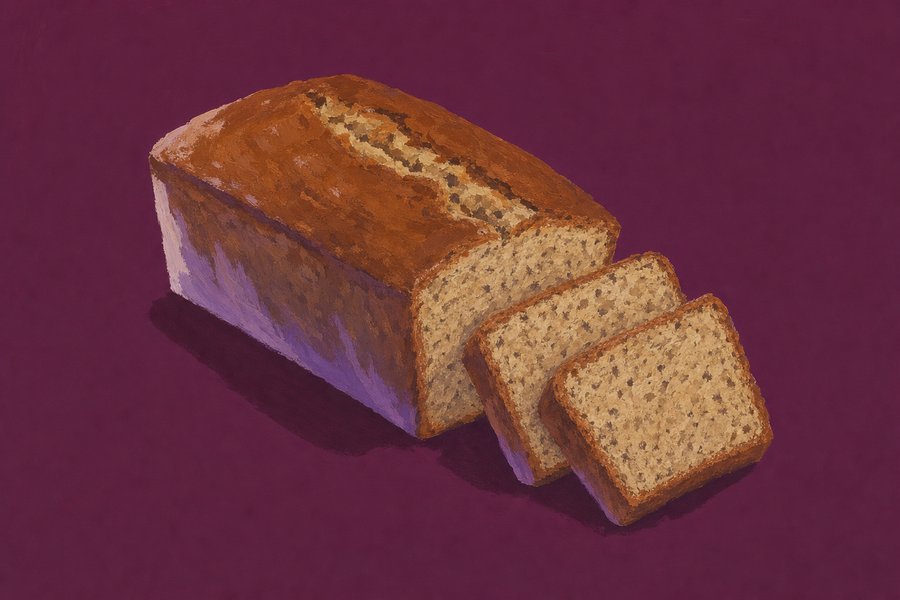
Banana bread or banana cake
English calls the same bake by two names, and the distinction is softer than it looks. Both are a batter poured into a loaf tin and chemically raised. There is no reliable compositional line between them: the same recipe appears under both names, and neither word implies a specific sugar level or fat level.
What the choice usually signals is register rather than method. Banana bread frames it as something plain, keeping, sliceable, eaten at breakfast. Banana cake frames it as something sweeter and more of a dessert, often iced. The batter can be identical; the framing is what changes, and it changes expectations about sweetness and about whether it will be iced.
Which means neither name is wrong, and a recipe search under one will surface results that belong to the other. That is worth knowing before concluding that a recipe has been mislabelled.
Why roasting the bananas changes the reasoning, not the recipe
Roasting bananas before they go into a batter is a real technique with a straightforward rationale: heat drives off water and concentrates what remains, and browning develops flavours that raw fruit does not have. Both are the same reasoning that governs a fruit preserve, where reduction concentrates and where the browning of sugars changes the taste.
Banana itself is not a fruit this site can say much about numerically. It appears in the register with a measured pH range that reaches above the 4.6 line, and with its pectin not established, so how it behaves as a preserve is an open question, and how much water roasting removes from it is not established here either. No figures are given for either, rather than invented ones.
A second British naming problem in the same family, where a word covers a sweet fruited bun in most of England and a plain bread roll in West Yorkshire, is at teacake. The site’s approach to quantities is at recipes, and the borrowed terms are in the glossary.
Questions about the names
What does cake banane mean?
It is the French-language name for a banana loaf. French uses "cake" more narrowly than English: it means a loaf-shaped cake baked in a tin, typically with fruit in it.
What is the difference between banana bread and banana cake?
Usually nothing in the batter. Both are a chemically raised batter in a loaf tin, and the same recipe appears under both names. The choice signals register, whether plainer and breakfast-ish or sweeter and more of a dessert, rather than method.
Why roast the bananas first?
Heat drives off water and concentrates what is left, and browning develops flavours raw fruit does not have. How much water it removes is not established here, so no figure is given.
Does the register say anything about banana?
A little, and not enough. Its measured pH range reaches above the 4.6 line and its pectin is not established, so how it behaves in a preserve is an open question.