What it sets on
Blackcurrant is classified high in pectin and placed in set group 1 by all three extension listings the register draws on, the group defined as carrying enough pectin and enough acid to gel without help. It is one of 10 fruits here in that group, and in practice one of the most reliable: a blackcurrant jam is far more often overcooked than under-set.
That is the whole practical answer, and it means the usual interventions are unnecessary. No added pectin. No lemon. No preserving sugar with pectin blended in. Plain sugar, and a cold plate to catch the set early rather than a long boil to chase it.
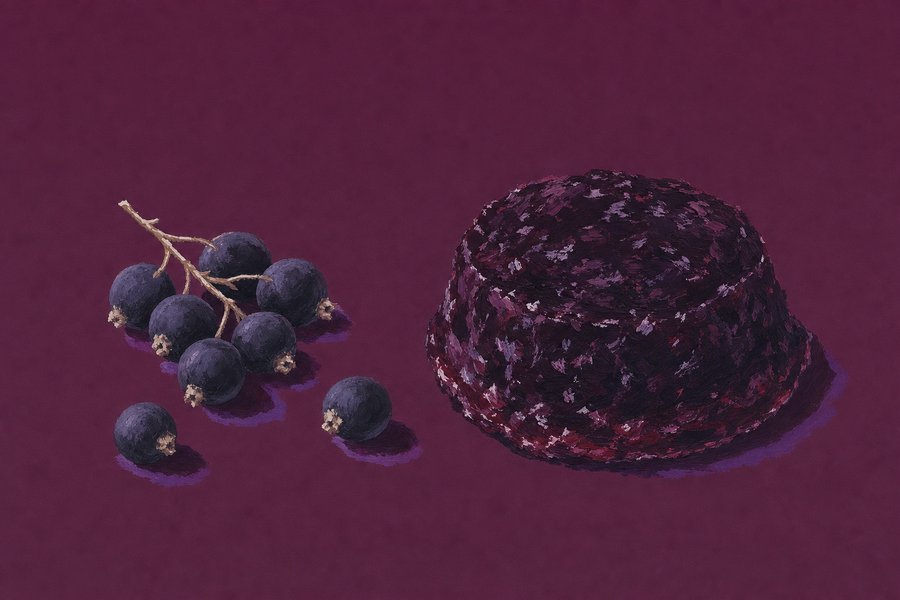
The figure nobody has published
Every account of blackcurrant describes it as sharp, and every cook who has eaten one raw agrees. What the reference sources do not contain is a number. The FDA CFSAN approximate-pH table, which supplies the pH range for every other fruit here, has no row for blackcurrant. And this site's rule is that a field with no source stays empty and reads not established rather than carrying an estimate.
So the acid class is not asserted either, because it is derived from the pH and there is nothing to derive it from. Blackcurrant is one of 6 fruits in the register in that position; redcurrant is another, for the same reason: the source table treats the currants as one entry it does not carry.
This is not a gap that needs filling to make the page useful. The set-group classification already answers the practical question, and it answers it more directly than a pH would: group 1 means both conditions are met, whatever the exact figure turns out to be. Stating a plausible number would add nothing except the risk of being wrong, and the widely copied version of this table that this register was built to replace is full of exactly such numbers. The sources are listed, one by one, on the sources page.
Where the difficulty actually is
With the set effectively guaranteed, the two real variables in a blackcurrant preserve are skin and yield. The skins are tough and stay whole unless they are softened before the sugar goes in because sugar firms them, so a jam sweetened too early keeps them chewy for good. And blackcurrants are small and seedy, so the yield of a strained jelly is markedly lower than the same weight of a soft fruit; the fruit-per-kilogram figures in the EU definitions are worth reading with that in mind.
Neither of those is a setting problem, which is the point of separating the questions. If a blackcurrant jam does fail, the diagnosis in jam that will not set will almost always land on concentration rather than pectin. The nearest comparison on this site is gooseberry, which is measured on both axes and behaves the same way in the pan.
The whole register, fruit by fruit, is at sugar, acid and pectin content of fruits, and the substance itself is under pectin.
Questions about blackcurrant preserves
Does blackcurrant jam need added pectin?
No. Blackcurrant is classified high in pectin and sits in set group 1, the group that gels unaided. Added pectin makes an over-firm jam rather than a better one.
What is the pH of blackcurrant?
Not established in the sources this register uses. The FDA CFSAN approximate-pH table has no blackcurrant row, so the field is left empty rather than filled with an estimate. Its set group already answers the practical question.
Does blackcurrant jam need lemon juice?
Not for the set: set group 1 means the acid condition is met. Lemon is a flavour decision here, not a structural one.
Why are the skins in my blackcurrant jam tough?
Because sugar firms them. The skins have to be softened in liquid before the sugar goes in; once it is in, they stay as they are.
Is blackcurrant jam easy to make?
The set is the easy part: it is one of the most reliable fruits in the register. The usual faults are overcooking and tough skins, not a failure to gel.