What it is, and what it does
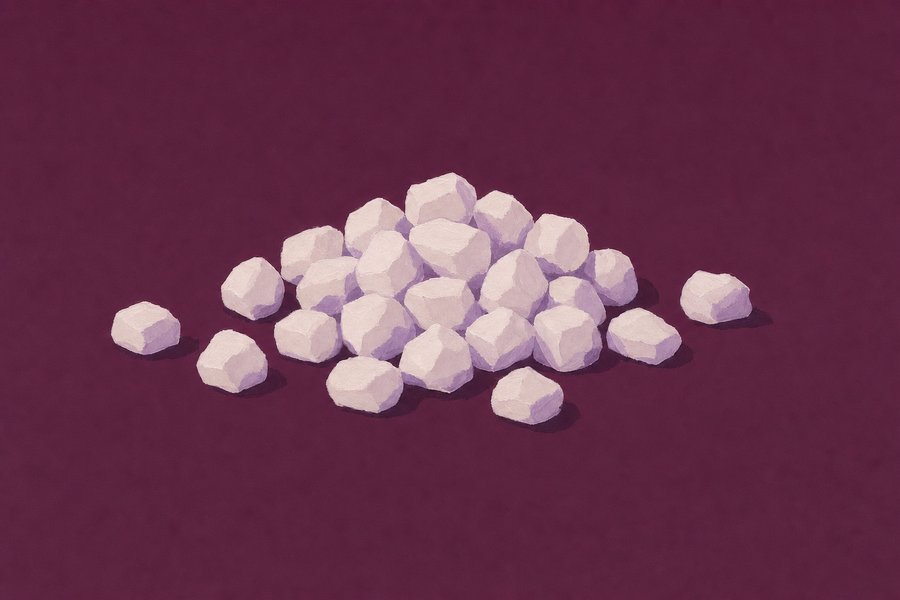
Pearl sugar is sugar compressed into hard irregular grains, several millimetres across, that do not dissolve at baking heat. Scattered on a dough before it goes in, they come out as visible white grains with a crunch; ordinary granulated sugar in the same place dissolves into the surface and disappears, leaving a slightly sticky patch and no texture.
That single property is the whole of it, and it is why the ingredient is not optional in the bakes that call for it. On a chouquette the pearl sugar is the entire finish: the bun is unfilled choux pastry and the sugar is the only thing added to it. Substitute granulated and there is nothing left that makes it a chouquette.
The names
In French there are two and they mean the same thing: sucre en grains and sucre perlé. Both denote the coarse sugar that survives the oven, and a recipe using either is asking for the same ingredient. That is worth knowing because a reader who searches only the first will conclude the second is something else.
Two names circulate in English, Swedish pearl sugar and Belgian pearl sugar, usually with the claim that the Belgian grain is larger and made for waffles. This site's sources do not carry either term or that distinction, so it is recorded here as not established rather than repeated. What is documented is the use: in Sweden it is the standard finish on a sweet bun, and a kanelbulle is recorded in the dataset as commonly finished with pearl sugar and sometimes flaked almond.
Where it is used on this site
- Chouquettes, where it is the only thing on the bun, and therefore the defining ingredient rather than a decoration.
- Kanelbullar and the other Swedish sweet buns, where it goes on after the egg wash, often with flaked almond.
- Tarte tropézienne, on the brioche lid, which is the part of that cake most often left out of descriptions of it.
Substitutions, and the one that half works
There is no true substitute, because the property being substituted for is a manufacturing one. Two partial answers exist. Crushed sugar cubes are compressed sugar and behave closer to pearl sugar than granulated does, if broken coarsely rather than crushed to grit. Nib sugar sold for waffles is the same class of product under another trade name.
What does not work is granulated sugar, coarse granulated, or demerara. The first two dissolve and the third dissolves and browns. And nothing here is related to jam sugar, which is granulated sugar with pectin and acid blended in for an entirely different purpose. Both are “a special sugar” and they have nothing in common. Other terms of this kind are in the glossary.
Questions about pearl sugar
What is pearl sugar?
Sugar compressed into hard coarse grains that do not dissolve at baking heat, so they stay visible and crunchy on the finished bake. In French it is sucre en grains or sucre perlé.
Can I use granulated sugar instead of pearl sugar?
Not for the same result. Granulated dissolves into the surface and leaves no texture, which on something like a chouquette removes the only thing that was added to it.
Is Belgian pearl sugar different from Swedish pearl sugar?
The claim that the Belgian grain is coarser is widely repeated, but this site’s sources do not carry either term or the distinction, so nothing is asserted about it here.
What is sucre en grains?
Pearl sugar. French uses two names for it, sucre en grains and sucre perlé, and they mean the same ingredient.
What can I use instead of pearl sugar?
Coarsely broken sugar cubes come closest, since they are also compressed sugar. Nib sugar is the same product under another name. Granulated, coarse granulated and demerara all dissolve.