The sizes, with what each one holds
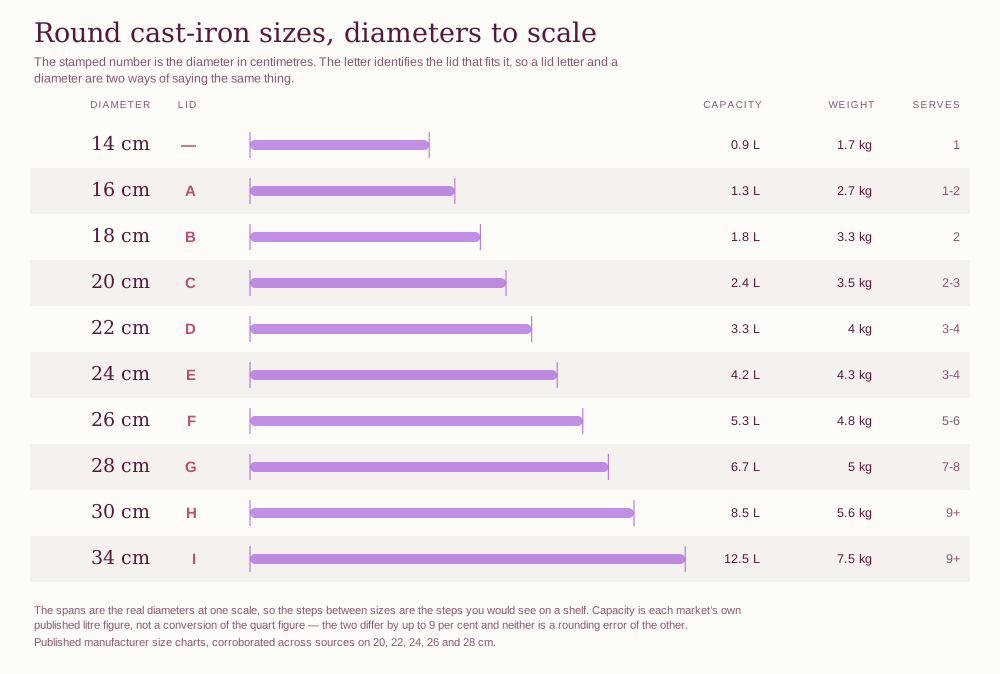
Diameter is the number on the box; capacity is the number that decides whether a recipe fits. Depth is not proportional to width across a range, so the jump from one size to the next is not a constant: 20 cm holds 2.4 L and 24 cm holds 4.2 L, which is considerably more than the four centimetres suggest.
The lid letter is the manufacturer's own size code, and it is the practical one to know: lids are sold and matched by letter rather than by centimetre.
| Diameter | Lid letter | Capacity | Weight | Serves |
|---|---|---|---|---|
| 14 cm | — | 0.9 L | 1.7 kg | 1 |
| 16 cm | A | 1.3 L | 2.7 kg | 1-2 |
| 18 cm | B | 1.8 L | 3.3 kg | 2 |
| 20 cm | C | 2.4 L | 3.5 kg | 2-3 |
| 22 cm | D | 3.3 L | 4 kg | 3-4 |
| 24 cm | E | 4.2 L | 4.3 kg | 3-4 |
| 26 cm | F | 5.3 L | 4.8 kg | 5-6 |
| 28 cm | G | 6.7 L | 5 kg | 7-8 |
| 30 cm | H | 8.5 L | 5.6 kg | 9+ |
| 34 cm | I | 12.5 L | 7.5 kg | 9+ |
Serving counts assume a main course with the pan comfortably rather than completely full.

The published capacities disagree with themselves
Worth knowing before treating any capacity as exact. Manufacturers list both quarts and litres, and converting the quart figure does not always give the litre figure printed beside it. The largest disagreement across these sizes is at 16 cm, where the two published numbers differ by about 9.2%.
Neither figure is wrong exactly, since they are rounded from different starting points, and a cast pan has genuine variation anyway. What it means practically is that a capacity quoted to two decimal places is false precision, and that choosing between two adjacent sizes on a 0.2 L difference is choosing on noise. Choose on serving count and on weight instead.
Weight is the real constraint
The weights in the table are the empty pan. A large casserole full of liquid is a two-handed lift out of a hot oven, and that is a practical limit rather than a footnote: the 28 cm sizes and up are heavy enough empty that many people find them awkward, and full they are heavier than most roasting tins anyone is used to. Anyone buying a first casserole is usually better served by the size below the one they think they want.
Two thirds full is the working maximum in any case. A casserole loaded to the rim boils over, and on an enamelled pan the marks where it does are permanent. That is why the useful capacity of a pan is always less than its published one, and another reason not to choose on a small difference in the stated litres.
Choosing between two sizes
Go up rather than down for anything that rises or spatters, and down rather than up for anything braised. A braise wants the liquid well up the meat; a pan too wide leaves it shallow, reduces it too fast and dries the top. A dough or a milk pudding wants headroom instead.
Two figures the table does not carry, because they belong to the range rather than the size. Enamelled cast iron is generally oven-safe well above any normal baking temperature, but the limiting component is usually the knob rather than the pan, since older phenolic knobs are rated far lower than the metal ones, and replacing a knob is the cheapest way to raise a pan's ceiling. And induction suitability is a property of the base rather than the size: cast iron is ferromagnetic throughout, so every size in the table works on induction.
Shape matters alongside size, and round and oval are not interchangeable at equal capacity. An oval takes a joint or a whole bird more efficiently and sits awkwardly on a round burner, heating unevenly at the ends. A round pan heats evenly and wastes space on anything long. For a single first casserole, round is the more generally useful.
For baking in a casserole, most obviously bread in a preheated covered pot, the useful conversion is base area rather than diameter. Twenty to 22 cm is about 21% more base area; 20 to 24 cm is about 44% more, which changes the bake rather than scaling it. More on that and on the French tool names in the kitchen section.
Find a size
The table reads one way: a number, and what it holds. These are the questions that run the other way: a lid with no pan to match it, a recipe that wants three litres, six people to cook for. Every figure comes from the same rows above.
A 24 cm casserole
- Lid letter
- E
- Capacity
- 4.2 L
- Also published as
- 4.5 qt
- Empty weight
- 4.3 kg
- Serves
- 3-4
- Usable at two thirds
- 2.8 L
The two published capacities differ by 1.4% on this size. Neither is converted from the other. The quart figure is the US market's rounding and the litre figure is the European one, so they disagree by a few per cent and a capacity quoted to two decimals is false precision.
What the finder is doing
The stamped number is the diameter in centimetres and the stamped letter identifies the matching lid. That is the whole of what the markings mean, and it is the question behind almost every search for a particular number. Letters run A at 16 cm to I at 34 cm; the 14 cm carries no letter.
The usable figure is derived, not published: it is the litre capacity at the two thirds this page gives as the working maximum, because a casserole loaded to the rim boils over and on enamel the marks do not come off. A volume lookup uses that, which is why it answers with the smallest size that takes the volume and the one below it, because the fill fraction is a rule of thumb and the capacities are rounded, so the honest answer is a pair, not a verdict.
Capacity at a given diameter also varies by brand and by wall shape: one maker's 24 holds slightly less than another's. These are typical published values rather than spec guarantees, and the sources disagree on whether the number is the rim or the inside diameter, and they differ by a few millimetres, so this says diameter and does not claim which.
Questions about sizes
What does the letter on the lid mean?
It is the manufacturer’s size code, and replacement lids are sold by it. If you need a lid, the letter is more useful than the diameter in centimetres.
Why do the quart and litre capacities not match?
Each is rounded from a different starting point rather than converted from the other. The gap reaches several per cent on some sizes, so a capacity quoted to two decimals is false precision. Choose by serving count instead.
Which size should I buy first?
Usually one size smaller than instinct suggests. Weight is the constraint people underestimate: the larger pans are awkward empty and heavy full. Match the size to how many people you normally cook for, not to the largest recipe you might one day attempt.
How full can a casserole be?
About two thirds. Loaded to the rim it boils over, and on enamel the marks are permanent. This is why usable capacity is always less than published capacity.
My recipe says 20 cm and I have 24 cm. Does it matter?
Scale by base area, not diameter, because 20 to 24 cm is about 44% more area. For a braise the wider pan will reduce the liquid too fast; for a batter the same quantity will be much shallower and bake faster.