What is creme patissiere?
The short answer to what is creme patissiere: milk, egg, sugar and a starch, cooked together until the starch thickens and then held at the boil briefly so it stops tasting of raw flour. That last part is what makes it a pastry cream rather than a sweet sauce. It is thick enough to pipe and to hold its own shape, and it is the base every other cream here is built from.
The longer answer to what is creme patissiere is that it is a category rather than a single preparation, because the same cooked base takes five different names depending on what is folded into it afterwards. That is the whole of the vocabulary problem, and the table below is the whole of the solution.
The name is written several ways in English and all of them mean the same thing. Printed and searched forms include creme patissiere without accents, creme patisserie, cream patisserie and, in British kitchens, simply creme pat. Cream patisserie is a transposition of the French rather than a different preparation, and a recipe titled cream patisserie is describing this cream.
Creme pat deserves its own note because it is the form most often heard rather than read. It is ordinary professional shorthand in Britain and Ireland, it carries no difference in method, and a recipe that says creme pat means exactly this. Confectioner's custard is the older English name for the same thing.
The recipe, structurally: four ingredients and one decision
Asking how to make creme patissiere is really asking about one ratio and one judgement. The four components are milk, egg, sugar and starch, and each does a distinct job. The milk is the liquid and carries the flavour. The egg, usually yolks, sets partially and gives richness and colour. The sugar sweetens and softens the set. The starch, cornflour or flour, is what actually thickens it and what makes the difference between a cream and a custard.
The decision is how far to cook it. Starch does not reach its full thickening power until it boils, and it keeps a raw cereal taste until it has boiled for a short while. Stop early and the cream slackens as it cools; stop far too late and the starch network breaks and it turns grainy. That single judgement, rather than any ingredient, is where the preparation succeeds or fails. How to make creme patissiere well is therefore less about quantities than about recognising the point at which the starch is fully cooked. Any recipe worth following will say so; a recipe that gives only a time is guessing on your behalf.
That is also the honest limit of a reference page. How to make creme patissiere is a matter of watching a pan, and no table substitutes for having done it once with someone who knows the moment. What a table can do is tell you which of the six creams you are aiming at before you start.
Two structural notes worth knowing before consulting any method. Adding an acidic ingredient, lemon or a fruit purée, before the starch has set will degrade it, so acid belongs at the end. And whisking the finished cream hard after cooking tears the starch network, which is the usual reason a correctly thickened cream weeps in the fridge overnight.
The whole family, by what is added
This is the table the vocabulary reduces to. Read the middle column first: it is the only thing that changes.

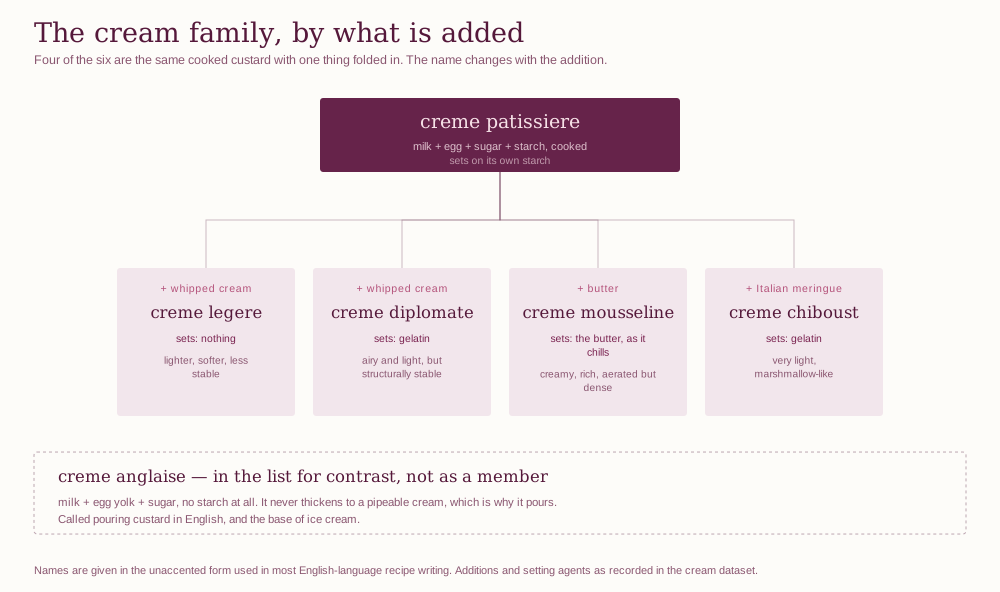
| Cream | Also called | Built on | Addition | What sets it | Texture |
|---|---|---|---|---|---|
| creme patissiere | pastry cream, creme pat, confectioner's custard | milk + egg + sugar + starch, cooked | — | starch (cooked out) | Thick, pipeable, holds its shape |
| creme legere | light pastry cream | creme patissiere | whipped cream | none | Lighter, softer, less stable |
| creme diplomate | diplomat cream | creme patissiere | whipped cream | GELATIN | Airy and light, but structurally stable |
| creme mousseline | mousseline cream, German buttercream | creme patissiere | BUTTER (beurre pommade) | none - the butter sets on chilling | Creamy, rich, aerated but dense |
| creme chiboust | Chiboust cream | creme patissiere | ITALIAN MERINGUE | GELATIN | Very light, marshmallow-like |
| creme anglaise | pouring custard, creme anglaise | milk + egg yolk + sugar, NO starch | — | none | Pourable, never pipeable |
Names are given in the unaccented form used in most English-language recipe writing. Crème anglaise is included as the contrast rather than as a member: it has no starch at all, which is why it pours and can never be piped.
Creme patissiere vs mousseline cream
Set out as creme patissiere vs mousseline, this is not a comparison of two recipes at all. Crème mousseline is pastry cream, with softened butter, or beurre pommade, beaten into it once it has cooled. Nothing else sets it; the butter firms as it chills. The result is richer, denser and more aerated than the cream it started from, and it holds up under weight, which is why it fills a Paris-Brest and a tarte tropézienne.
So mousseline cream vs pastry cream is a question of fat and stability rather than of technique. If a filling has to support something above it, the butter version is the one that will. If it has to taste light, it is the wrong choice, because butter is exactly what makes it not light. German buttercream is the same preparation under another name, which is worth knowing when reading across English and French sources.
Read again as mousseline cream vs pastry cream the other way round: everything true of the base cream remains true of the mousseline, including the starch judgement above. The butter changes what the cream can carry, not how it was cooked.
Creme diplomate, and the gelatin that separates it from legere
The same framing that settles creme patissiere vs mousseline settles this pair too: ask what was added. Crème diplomate and crème légère are both pastry cream lightened with whipped cream, in similar proportions, and they are constantly confused. The difference is gelatin. Diplomate carries it and therefore holds a shape overnight; légère does not and softens. A fruit tart that looked correct in the evening and had slumped by morning was filled with the wrong one of the two.
Crème chiboust is the third lightened version, made with Italian meringue instead of whipped cream and also set with gelatin, which gives it a marshmallow-like lightness. It is the traditional filling of a Saint-Honoré and it is the least stable of the family to handle, because a meringue-lightened cream cannot be re-worked once it has set.
Which one to use
- you need a thick pipeable filling that holds its shape: creme patissiere.
- you need pastry cream lightened with whipped cream, without gelatin: creme legere.
- you need pastry cream lightened with whipped cream, with gelatin: creme diplomate.
- you need pastry cream lightened with butter (beurre pommade), without gelatin: creme mousseline.
- you need pastry cream lightened with italian meringue, with gelatin: creme chiboust.
- you need a pouring sauce: creme anglaise.
Where a cream meets fruit, the fruit's own acidity matters as much as the cream's structure: an acidic purée folded into a starch-set cream will thin it. The measured figures per fruit are in the fruit register.
Questions about the pastry creams
What is creme patissiere?
Milk, egg, sugar and starch cooked together until the starch thickens and then held at the boil briefly so the raw-flour taste cooks out. It is thick enough to pipe and holds its shape, which is what distinguishes it from a pouring custard.
Is creme pat the same as creme patissiere?
Yes. Creme pat is ordinary British and Irish shorthand for the same preparation, with no difference in method or ingredients. The older English name is confectioner’s custard, and the spellings creme patisserie and cream patisserie also refer to the same thing.
What is the difference between mousseline cream and pastry cream?
Mousseline cream is pastry cream with softened butter beaten in after cooling. The butter is what sets it, and it makes the cream richer, denser and strong enough to support weight, as in the filling of a Paris-Brest or a tarte tropézienne.
Which holds overnight, diplomate or legere?
Diplomate. Both are pastry cream lightened with whipped cream, but diplomate contains gelatin and holds its shape; legere has none and softens. A tart that slumped by morning was filled with legere.
Why did my pastry cream go runny after chilling?
Usually one of three things: the starch never reached a full boil, so it never developed its thickening power; the cream was whisked hard after cooking, which tears the set starch; or an acidic ingredient went in before the starch had set and degraded it. Add acid at the end.