The step that does it
This is a cornbread with a layer of barely-set custard running through the middle of it, and the custard is not made separately. It forms during baking, from one instruction: the batter goes into a heated dish, then cream is poured into the centre of it and not stirred in.
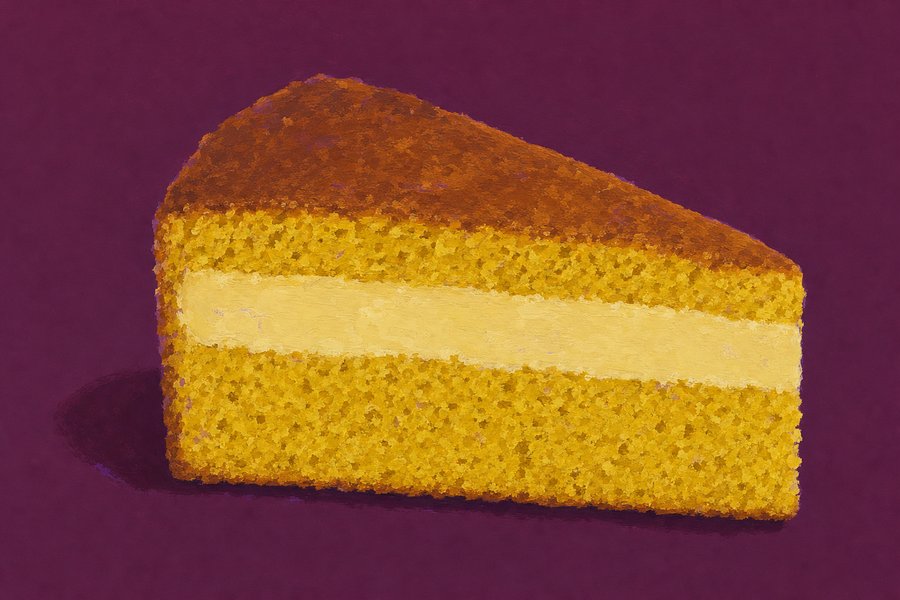
What comes out has three strata: a browned top, a soft set custard just beneath it, and cornbread below. The recipe’s author describes the middle as a creamy, barely set custard, and cooks reproducing it report the same thing consistently.
So the result is well attested. The instruction is unusually short for what it produces, and the whole of the technique is a negative: do not stir.
Why the explanation everyone gives is not evidence
Every account of this recipe explains the layer the same way: the cream is denser than the batter, so it sinks to a middle depth and settles there, and the batter rises and sets around it before the cream can go further. On that telling the custard layer is a matter of relative density and setting times.
That is plausible, it is coherent, and it is what everyone writes. It is also, as far as this page can establish, unmeasured. Nothing consulted reports a density, a temperature, or a test that separates that explanation from any other. So it is recorded here as the common explanation rather than as the reason.
The distinction is not pedantry, because the two states lead to different advice. A documented result supports the instruction: pour it in the middle, leave it alone. An unestablished mechanism does not support the confident predictions that usually follow it, on how thick the layer will be, how the dish size changes it, whether a different fat behaves the same way. Those are extrapolations from an explanation nobody has tested.
What is genuinely open
Three things this page cannot answer, and says so rather than guessing: why the layer settles at the depth it does, what governs its thickness, and whether the effect survives a change of dish or of dairy. Anyone reporting that a shallower dish gives a thinner layer is reporting an observation worth having; the mechanism that would let it be predicted is not on record here.
It is worth noticing what this custard is not. It is not a starch-set cream like a crème pâtissière, and not an egg-set curd like a lemon topping. It is a dairy layer setting in the heat of a surrounding batter, which is its own case. The site’s approach to quantities is at recipes.
Questions about custard-filled cornbread
How does the custard layer form?
Cream is poured into the centre of the batter and not stirred in. As it bakes the batter rises and sets around the cream, which finishes as a soft custard just below the browned top.
Why does the cream stay in the middle instead of sinking to the bottom?
The usual explanation is that the cream is denser than the batter and settles at a middle depth before the batter sets around it. That account is universal and, as far as this page can establish, unmeasured, so it is recorded as the common explanation rather than the reason.
Should the dish be heated first?
Yes. The batter goes into a heated dish, and that is part of the instruction as given.
Can the layer thickness be controlled?
Not on any basis this page can support. What governs the depth and thickness of the layer is not established, so predictions about dish size or a change of dairy are extrapolations from an untested explanation.