What does boulangerie mean?
The boulangerie meaning most dictionaries give is “bakery”, and that is the part that misleads. A French bread bakery. The term is LEGALLY PROTECTED in France: a shop may only call itself a boulangerie if it bakes its bread from scratch on the premises, from raw flour, water, yeast and salt. It may not sell bread baked from frozen dough or bought in from elsewhere.
So a shop selling bread is not automatically a boulangerie. One that bakes off frozen dough, or buys its loaves in from a central plant, sells perfectly good bread and is not permitted the name. This is why the sign matters on a French street in a way that a bakery sign does not elsewhere: it is not branding, it is a statement about where the bread was made.
The rule exists because the distinction had become invisible to customers. Industrially produced part-baked dough finished in-store looks and smells identical at the point of sale, and the protected term is how the difference stays legible.
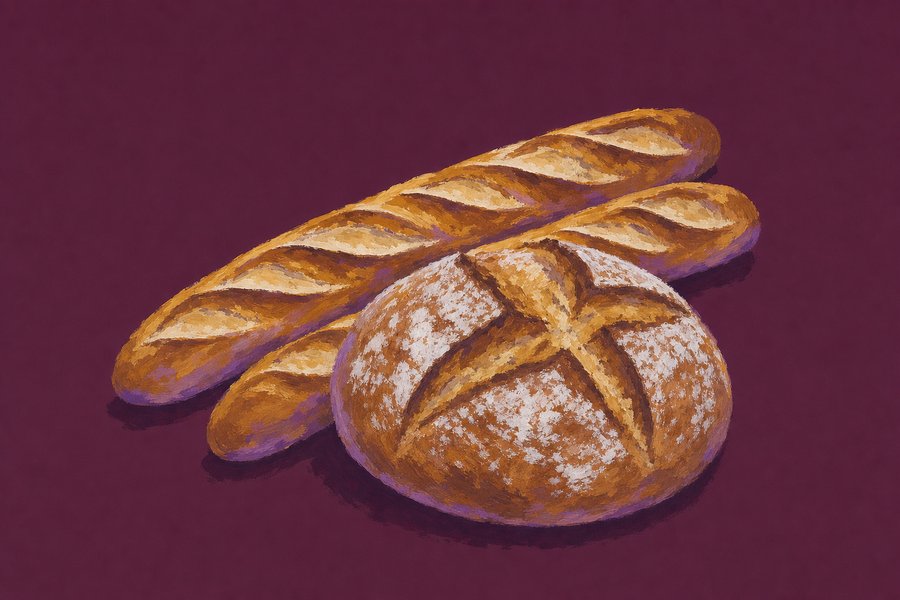
Boulangerie, patisserie, viennoiserie: the three-part vocabulary
The word only makes full sense against the other two, and together they are the framing French pastry schools use themselves.
- Boulangerie: bread, baked on the premises from raw ingredients.
- Pâtisserie: A French pastry shop. Also legally controlled in France and Belgium: only a shop with a certified maitre patissier may use the name.
- Viennoiserie: The third category: enriched, laminated or sweetened doughs that sit between bread and pastry - croissants, pains au chocolat, brioche, pains au lait.
Pâtisserie is controlled in the same spirit as boulangerie, in France and in Belgium: the name requires a certified maître pâtissier. Viennoiserie is the odd one of the three because it is not a kind of shop at all. It is a category of dough, and both a boulangerie and a pâtisserie will sell from it. A croissant is viennoiserie sold in a boulangerie.
In practice a boulangerie usually sells pastries too, and they are generally simpler than a pâtisserie's: a fruit tart rather than an entremets. That is a consequence of the qualification rather than of ambition.
Reading a French high street
A few practical consequences follow from the vocabulary. A shop signed boulangerie-pâtisserie is claiming both, which means both sets of conditions. A shop signed dépôt de pain is declaring the opposite: a bread depot, selling loaves baked elsewhere, and the honesty of that sign is the point of the system. And artisan boulanger on a shopfront is a further claim about the baker rather than the premises.
The word travels badly, which is why the boulangerie meaning is worth stating carefully in English. Outside France the term carries no legal weight at all: a shop anywhere else may call itself a boulangerie regardless of where its bread was made. The sign means something specific in France and means only style elsewhere.
The rule has a practical effect on opening hours that surprises visitors. Because the bread has to be baked on the premises, a boulangerie's day is built around the oven rather than around retail hours: an early opening, a closure in the afternoon in many towns, and a fixed weekly closing day. A shop selling bread from nine to seven without a break is usually telling you something about where the bread came from.
One consequence for anyone reading French recipes rather than French streets: the word also marks a category of product. A dough described as boulangerie style is claiming a lean bread dough of flour, water, salt and yeast, as against the enriched doughs of viennoiserie. That distinction survives in the vocabulary of the trade even where the legal protection does not reach.
A note on the related trades, since they appear on the same streets. A pâtissier is a pastry chef, feminine pâtissière, and that is the root of the cream's name, since crème pâtissière is literally the pastry chef's cream. A chocolatier and a confiseur are separate specialisms again. The full set of terms used across this site is collected in the glossary.
Questions about the term
What does boulangerie mean?
A French bread bakery, and a protected term. A shop may only use the name if it bakes its bread on the premises from raw flour, water, yeast and salt. Selling bread baked from frozen dough, or bought in from elsewhere, disqualifies it.
Is a boulangerie the same as a bakery?
Not quite. Every boulangerie is a bakery; not every bakery may call itself a boulangerie. The English word describes what is sold, the French one additionally describes where it was made.
What is the difference between a boulangerie and a pâtisserie?
A boulangerie is defined by bread baked on site. A pâtisserie is a pastry shop and the name requires a certified maître pâtissier. Many shops are signed as both, which means meeting both conditions.
What is a dépôt de pain?
A bread depot, a shop selling loaves baked somewhere else. The sign exists precisely because such a shop may not call itself a boulangerie, and it is the clearest signal on the street of which kind of shop you are in.
Does the protection apply outside France?
No. Outside France the word carries no legal weight, so a shop in any other country may use it freely regardless of where its bread was baked. There it indicates style rather than method.